In partnership with

Ship the message as fast as you think

Founders spend too much time drafting the same kinds of messages. Wispr Flow turns spoken thinking into final-draft writing so you can record investor updates, product briefs, and run-of-the-mill status notes by voice. Use saved snippets for recurring intros, insert calendar links by voice, and keep comms consistent across the team. It preserves your tone, fixes punctuation, and formats lists so you send confident messages fast. Works on Mac, Windows, and iPhone. Try Wispr Flow for founders.
AI for Impact Opportunities















We’re running a super short survey to see if our newsletter ads are being noticed. It takes about 20 seconds and there's just a few easy questions.
Your feedback helps us make smarter, better ads.
Some Reflections on Vibe-Coding and Social Impact
What do you call a nonprofit founder who codes by talking? Someone who finally found a use for all those pitch practice sessions.
I've been playing around with vibecoding a a decent amount widely. I spent today listening to this every.to all-day session on vibecoding (the recording is available if you want to check it out). It's not focused on impact—it's very technical—but it's still super interesting and gave me a ton of ideas.
I've had some success building newsletter sites with vibecoding. Right now I'm working on all three of our newsletter sites using it (our main PCDN site is still done by our developer), and I'm also building out my own personal site mostly with vibecoding.
But let me be clear: I know nothing about coding. This is all completely new territory for me. Databases are still kicking my ass—I've spent way too long trying to get basic form submissions to actually save somewhere, connect authentication, and debug errors that make zero sense. So if you're thinking this is smooth sailing, it ain't perfect. But when it works? It's genuinely fun.
And I've got a long way to go. This isn't a "I figured it out" post. This is a "I'm learning in public and here's what's clicking so far" post.
Here's what's getting me excited: vibecoding can be about learning a new way to work that makes you faster, sharper, and less dependent on waiting for other people to solve your problems.
Even if you never deploy a single website, getting some basics of vibecoding can be super beneficial for you individually:
Building better projects inside Perplexity, ChatGPT, or Claude. Understanding how to give clearer instructions, structure prompts, and iterate on outputs makes every AI tool you use more effective.
Automating repetitive admin tasks. Whether it's reformatting data, generating report templates, or creating email sequences, knowing how to describe what you want (and refine it) saves hours every week.
Building custom learning platforms or resources. Want a simple training module for volunteers? A searchable FAQ for program participants? A resource library that's easier to navigate than a Google Drive? You can prototype those now.
Creating lightweight tools that solve your specific workflow problems. The intake form that works exactly how you need it. The event signup page that doesn't require six different tools. The dashboard that shows the three metrics you actually care about.
These aren't "change the world" projects. They're "get my time back" projects. And for people doing impact work—where capacity is always stretched—that matters.
And if you've got the time, curiosity, and dedication to go further? You can start building things for the wider impact community or your organization. Tools that didn't exist before because they weren't profitable enough for a startup to care about, but they're exactly what small nonprofits, mutual aid groups, community organizers, or grassroots movements actually need.
What I've actually been working on
Most of my time has been spent on newsletter sites. Building out custom pages, experimenting with different layouts, trying to get the signup flows working smoothly. It's been a lot of trial and error, but I'm seeing progress. The three newsletter sites I'm working on are all at different stages, and my personal site is coming along too.
Resource directories are something I've seen other people build—searchable lists of services, clinics, legal resources, that kind of thing. I'm not doing that myself yet (I’ve tried but not had success yet), but it seems like a solid use case if you're building for community orgs or mutual aid groups.
Anything more complex—like real database-driven apps, user authentication systems, client management tools—that's probably months or years away from where I am now. Maybe I'll get there eventually or not.
Some tools that might be useful
I'm rotating between a few platforms depending on what I'm trying to build:
Bolt is fun when I want fast momentum and don't care about perfect code structure.
Lovable feels more conversational and works well when I'm figuring things out as I go. There's actually a good case study from Better.sg about using Lovable for social impact projects that's worth checking out.[better]
Cursor is super popular and have played with it but only a bit.
Replit is solid if you want everything in one place—build, test, deploy—without juggling a million tabs.
v0 by Vercel is surprisingly good for generating nice-looking UI components fast.
Most of these have free tiers. You can experiment, break things, learn a bit, and decide if it's worth paying before you commit. If you try it and hate it, you're out zero dollars and maybe an hour of your time.
Where this gets interesting: future tools and trends for impact
This is still early, but you can see where it's headed. A few directions that feel especially relevant for social impact work:
Voice-first workflows are getting real. Tools like Monologue (more on that below) and voice-enabled coding assistants are making "talk → build → test" smoother. That's huge for non-technical people who think in problems, not code.
Agents that work across your tools. Instead of just generating code, we're moving toward agents that can update websites, sync CRMs, draft reports, log outcomes, and send summaries—with you approving key steps. That's a game-changer for small teams.
Better small-database experiences. The gap between spreadsheets and full CRMs is still too wide. Expect more tools that give you structure without complexity—perfect for tracking volunteers, participants, resources, or donor relationships.
Built-in safety and privacy features. As more community orgs build their own tools, we'll need better defaults around data protection, PII detection, and secure storage. The best tools will guide you toward safer practices, not just fast launches.
Impact dashboards and auto-reporting (use carefully). Auto-generated visualizations and narrative reports can save admin time, but only if your underlying data is solid. Garbage in, garbage out still applies.
If you're working with vulnerable communities, the future also demands stronger norms around consent, data minimization, and transparency. Build only what you need, collect the minimum, and be clear about where data lives and who can access it.
A resource I actually use (affiliate link, but genuinely one of the best I've found)
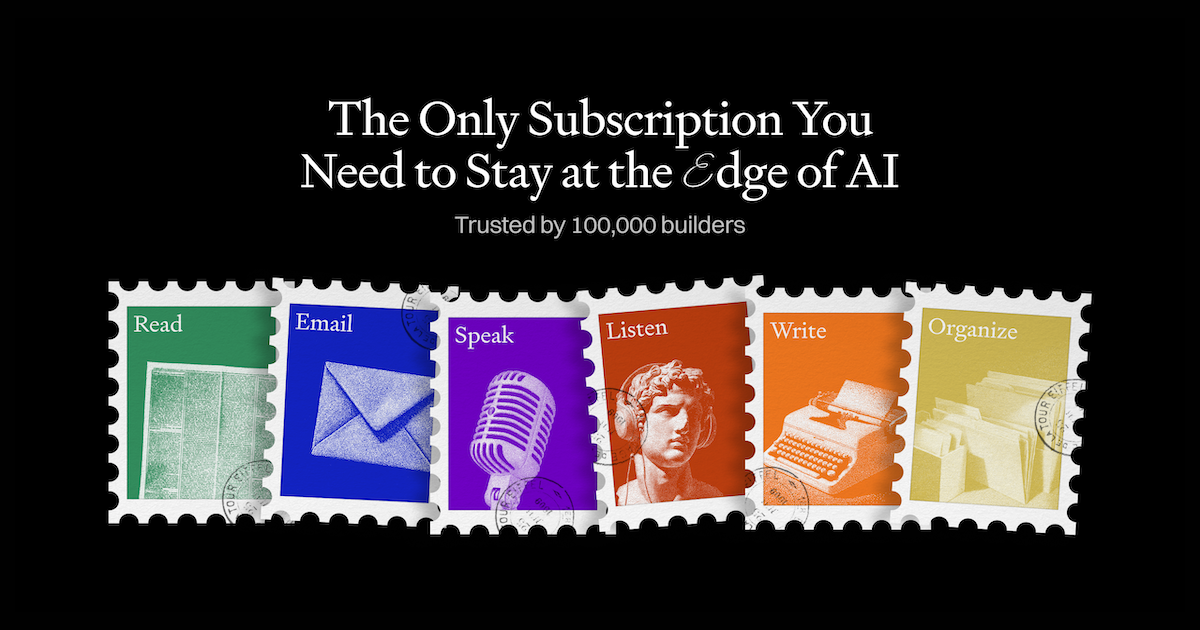
The Only Subscription You Need to Stay at the Edge of AI
Full disclosure: this is an affiliate link, but every.to is genuinely one of the best resources I've found for staying current on AI without drowning in hype or doomscrolling. It's a daily newsletter on what comes next in tech with over 100K readers.
It's also one of the best places to access genuinely useful AI tools at an affordable price, including:
Monologue (voice-to-text for Mac)
Coral (AI email assistant for Mac)
Sparkle (Mac desktop organization)
Beyond the tools, you get access to workshops and practical insights on building with and using AI effectively. The podcast can be great too—it's one of my go-tos for staying informed without getting overwhelmed.
Even if you don't want the paid tier, their free newsletters and podcast are worth subscribing to for keeping tabs on trends and strategies.
Check it out here: https://every.to/?via=pcdn
A few things that make this less frustrating
Some practices that have helped me not lose my mind:
Timebox your debugging. If you've been stuck on the same error for 20 minutes, switch strategies. Watch a tutorial, ask a different way, or take a break. Grinding doesn't help.
Ask the AI to explain why something broke, not just how to fix it. You'll learn faster and avoid repeating the same mistake.
Keep secrets out of your code. Use environment variables for API keys and never paste sensitive data into prompts.
Save working versions often. When something works, make a copy before you keep tinkering. You'll thank yourself later.
Start small and boring. Don't try to build authentication + database + payments + integrations on day one. Build one piece, make it work, then add more.
It may not be for you (and that's totally fine)
Look, vibecoding isn't for everyone. Some people will love the iterative, "describe it until it's right" process. Some people will find it frustrating and would rather use a no-code tool or work with a developer.
But if you're the kind of person who likes experimenting, who gets energized by building things, who's willing to tolerate some chaos in exchange for more control—it's genuinely fun. And for social impact work, where capacity is tight and budgets are tighter, being able to prototype your own solutions can shift what's possible.
Even if you're just using these skills to work smarter with AI tools you already use—building better prompts, automating admin tasks, creating custom resources—that's valuable. You don't have to build a full app to benefit from thinking like someone who builds things.
Share your favorite tools if you've been experimenting with vibecoding or AI for impact work. I'm always curious what's working for other people drop us a response
At some point this year we'll probably do a Career Campus or public workshop on this. The goal wouldn't be to turn people into engineers—it'd be to help changemakers build one working prototype that solves a real workflow problem. If that sounds interesting, stay tuned.
Why did the social entrepreneur bring a keyboard to their voice-coding session? Because even the future needs an undo button.
News & Resources
🤖 Your Daily AI Impact Joke
Why did the AI chatbot apply for a job at the nonprofit?
It wanted to make an "impact"—but kept hallucinating its resume!
📰 News
Wikipedia Foundation Warns AI Is Threatening Open Knowledge Sustainability
In this 404 Media report, the Wikimedia Foundation says it’s seeing declining human traffic as people get Wikipedia’s information via AI chatbots and AI summaries without clicking through, threatening long-term sustainability.
The Internet Faces a Choice: Abundance with Redistribution or Artificial Scarcity
This Tech Policy Press essay argues societies face a choice between treating information as abundant (and redistributing value where AI is deployed) versus doubling down on paywalls/licensing that can deepen inequality in knowledge access.
Support Groups Emerge for People Experiencing AI Chatbot-Induced Mental Health Crises
This NPR story reports on The Human Line, a support community of roughly 200 members responding to chatbot-related crises, alongside growing calls for safeguards and accountability.
AI Promises Productivity Gains But Reality Shows Complex Workplace Disruption
This MIT Technology Review piece argues AI is likely to complement human labor as a general-purpose technology, even as many workers say today’s tools can still hinder productivity.
Google Acquires Hume AI Leadership in Voice Technology Push
This WIRED report says Google hired top talent from Hume AI as competition intensifies around voice interfaces and AI device ecosystems.
💼 Jobs, Jobs, Jobs
jobs.pcdn.global — Over 1,100 impact jobs, updated daily, across diverse sectors around the globe
👤 LinkedIn Profile to Follow
Laura Chau — Consumer tech / commerce tech investor sharing analysis on AI and emerging product shifts.
🎧 Today's Podcast Pick
NPR TED Radio Hour — “Who is really shaping the future of AI?” — A look at the forces (power, politics, and incentives) steering where AI goes next.